Chinese Traditional Wear: Hanfu, Qipao & Beyond
From 3,000-year-old Hanfu (汉服) to 1920s Shanghai Qipao (旗袍) — Chinese traditional wear spans four iconic styles, six dynasties, and the cities where you can still wear them today. Your complete guide to understanding, comparing, buying, and experiencing China's textile heritage.

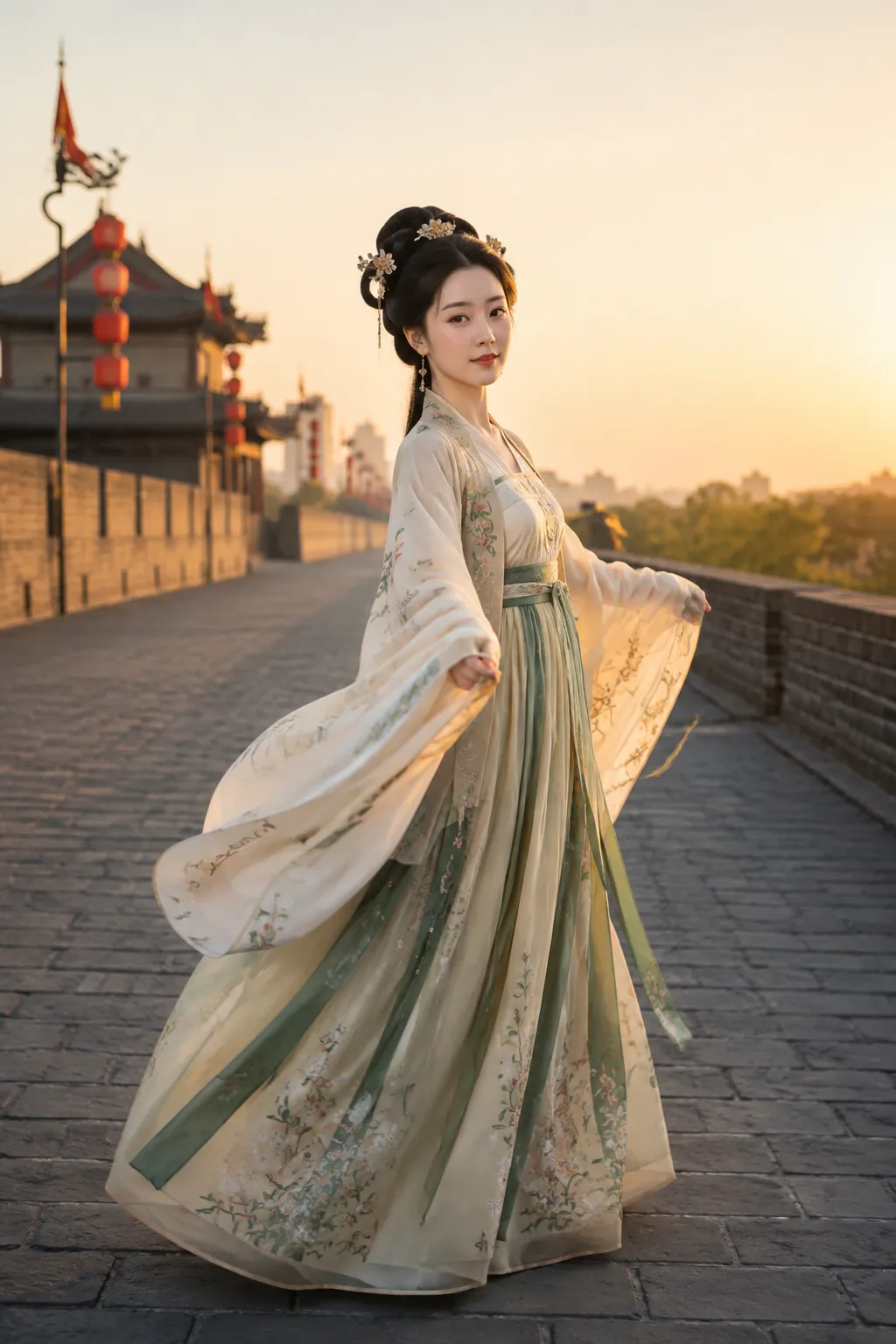
Hanfu photoshoot at Xi''an Ancient City Wall
6
Major Styles
3,000+
Years of History
12+
Dynasties Covered
55
Ethnic Traditions
What Is Chinese Traditional Wear?
Chinese traditional wear encompasses over 3,000 years of clothing history, from the flowing robes of ancient dynasties to the tailored elegance of modern Shanghai. The umbrella term covers four major styles: Hanfu (汉服, Hànfú) — loose layered robes worn since the Han dynasty, Qipao (旗袍, Qípáo) — the form-fitting silk dress born in 1920s Shanghai, Tang suit (唐装, Tángzhuāng) — a mandarin-collar jacket popular for festivals, and the Zhongshan suit (中山装, Zhōngshān zhuāng) — China's iconic revolutionary-era menswear. Beyond these, 55 ethnic minorities maintain distinct textile traditions from Miao silver headdresses to Tibetan woolen robes.
Unlike Western fashion — which changes by decade — Chinese clothing evolved by dynasty: the Han set the foundation with crossed collars and wide sleeves, the Tang introduced bold colors and Persian influences, the Song refined elegance into restrained simplicity, the Ming revived Han traditions with pleated skirts and circular collars, and the Qing brought Manchu styles that directly inspired the modern qipao. Each dynasty left its mark not just on fabric, but on the cities where you can still experience these styles today.
「中国有礼仪之大,故称夏;有服章之美,谓之华。」
Garment histories and museum details in this guide are checked against the collections of the Palace Museum (故宫博物院) and the China National Silk Museum (中国丝绸博物馆) — the two institutions holding the world's most complete imperial-robe and silk-textile archives.
Hanfu, Qipao, Tang Suit & Zhongshan Suit
Four styles, four eras, four stories. Each linked to a city where you can experience it firsthand.
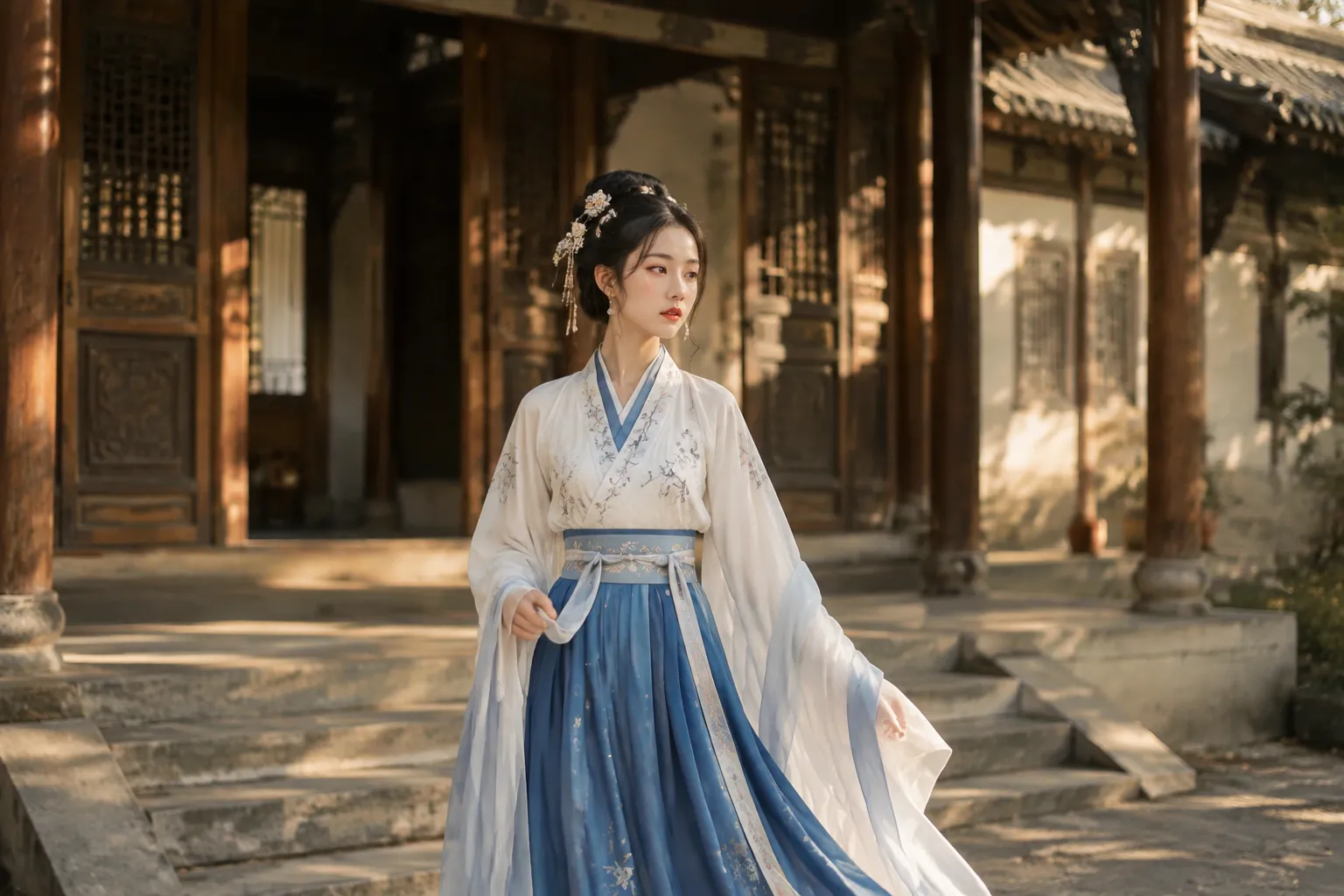
Hanfu 汉服 Hànfú
Crossed collars (交领), flowing wide sleeves, sash-tied layered robes. The foundational garment of Han civilization, now experiencing a massive youth-led revival.
Explore Hanfu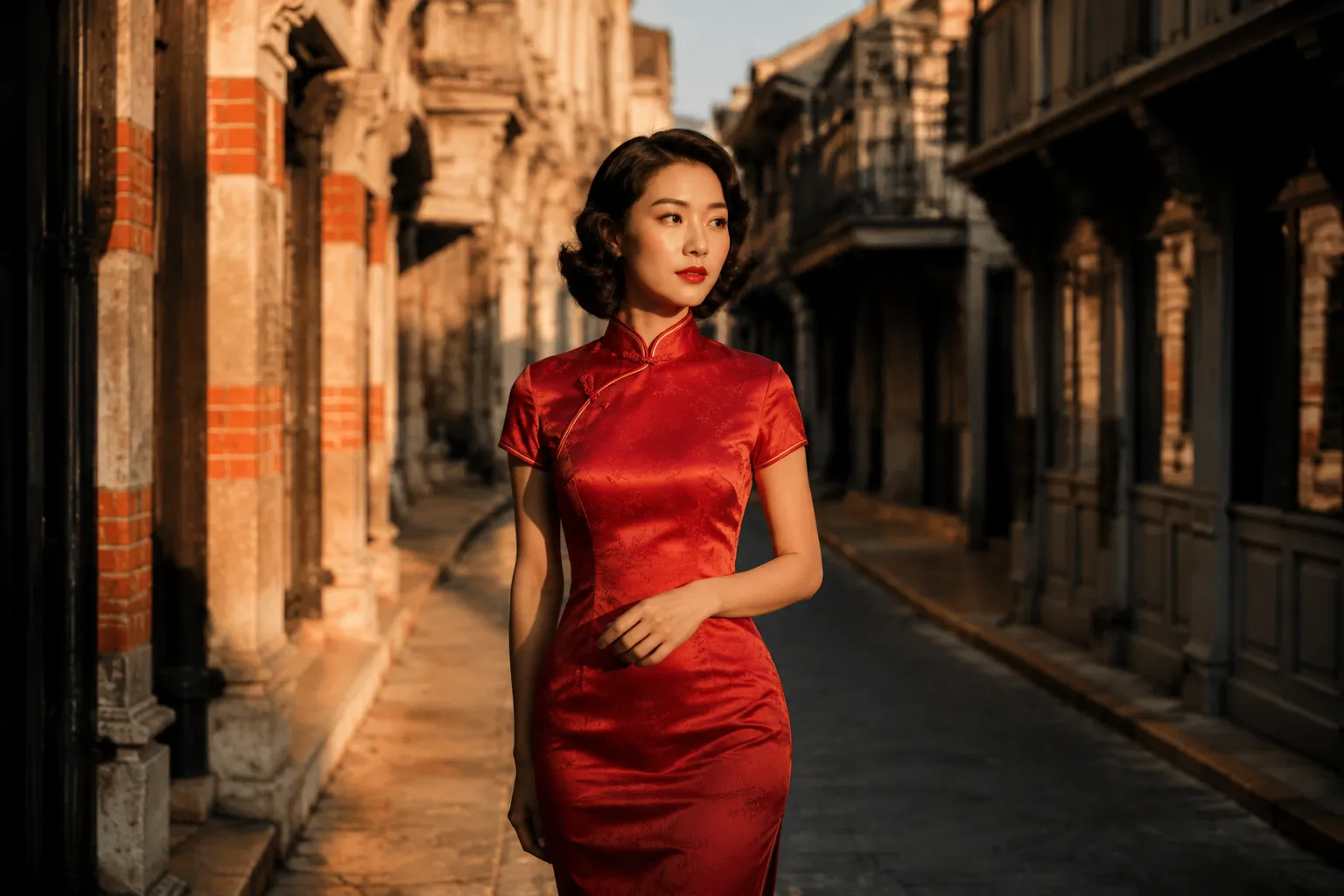
Qipao 旗袍 Qípáo
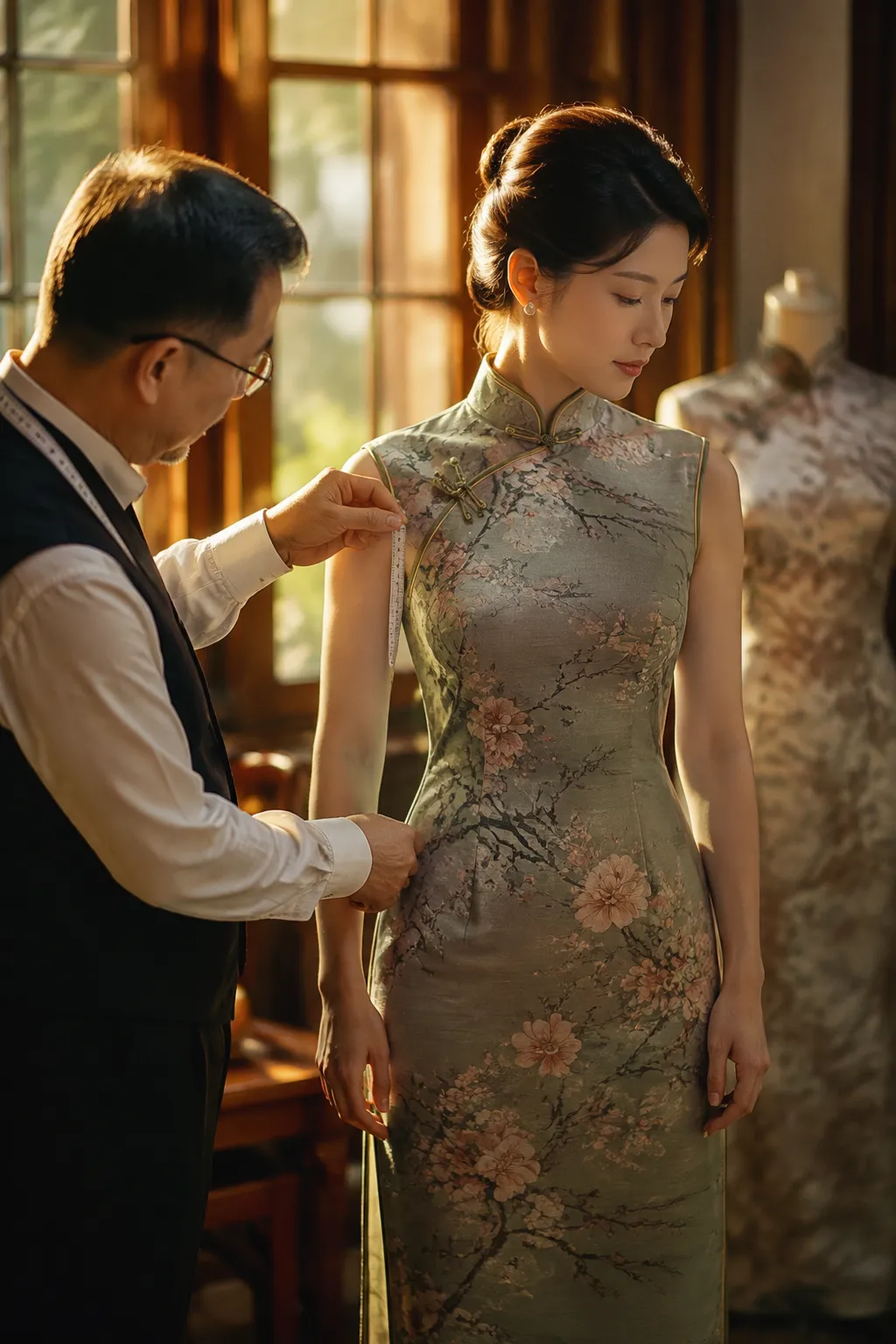
Form-fitting silk dress with high mandarin collar (立领), coiled frog buttons (盘扣), and side slits. China's most globally recognized fashion export.
Explore Qipao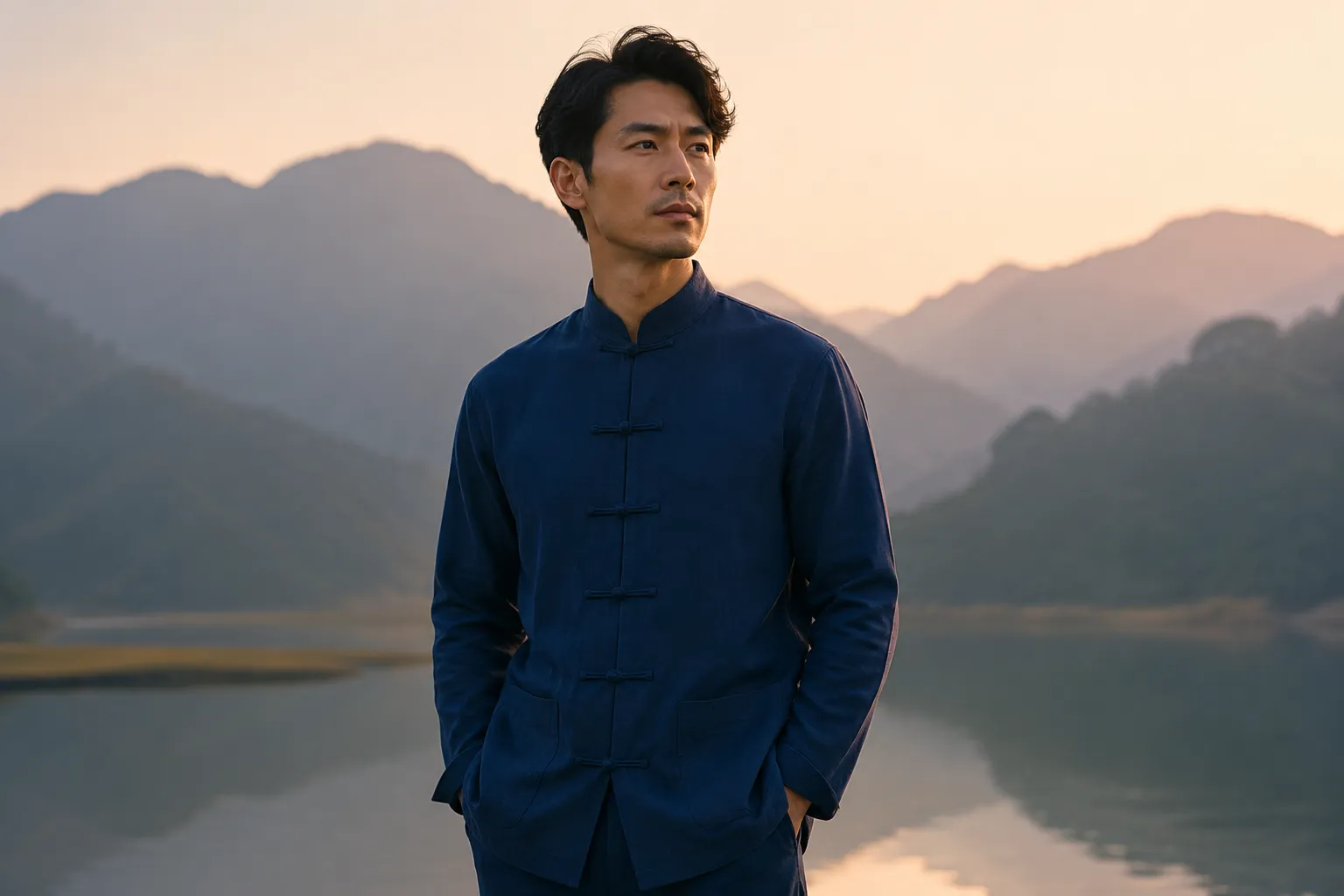
Tang Suit 唐装 Tángzhuāng
Mandarin-collar jacket with knotted frog buttons and silk brocade. Modern evolution of Qing Magua (马褂), popularized at 2001 APEC summit.
Explore Tang Suit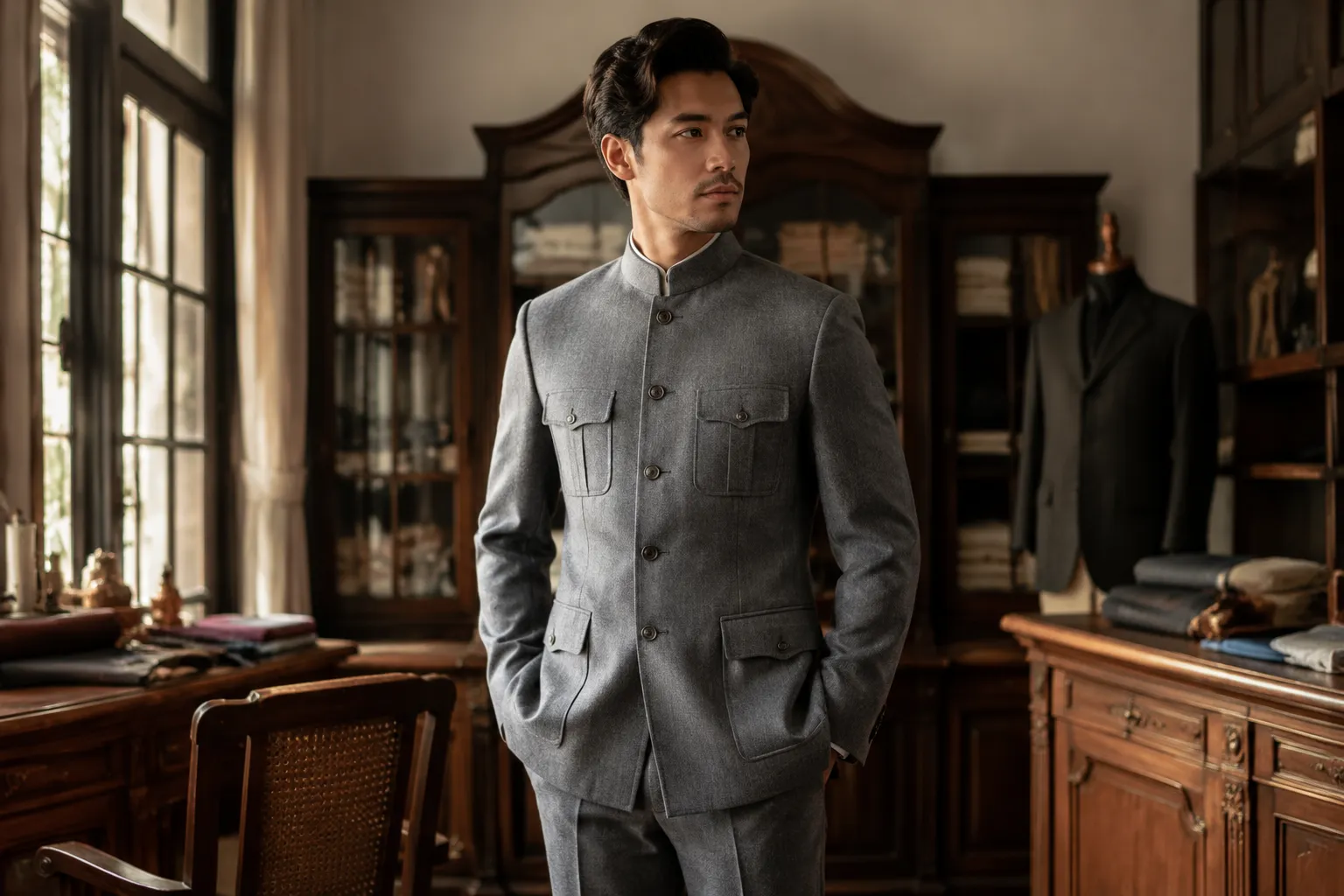
Zhongshan Suit 中山装 Zhōngshān zhuāng
Designed by Dr. Sun Yat-sen — four patch pockets for the Four Virtues, five buttons for government branches. China's most iconic political garment.
Explore ZhongshanHanfu vs Qipao vs Tang Suit vs Zhongshan
Quick differences at a glance. For a deeper comparison, see the full interactive guide.
| Feature | Hanfu 汉服 | Qipao 旗袍 | Tang Suit 唐装 | Zhongshan 中山装 |
|---|---|---|---|---|
| Period | Pre-Qin to Ming (c. 2700 BC – 1644 AD) | 1920s Shanghai to present | Qing dynasty to present (modern revival) | 1910s to present |
| Silhouette | Loose, flowing, layered robes | Form-fitting, one-piece, high slits | Straight, boxy jacket with mandarin collar | Structured, military-inspired suit |
| Collar | Crossed collar (交领), right lapel over left (右衽) | High mandarin stand-up collar (立领) | Mandarin stand-up collar (立领) | Turned-down collar with stiffened lapels |
| Closure | Sash ties — no buttons | Frog buttons (盘扣) + side zipper | Frog buttons (盘扣), center front | Five center-front buttons + cuff buttons |
| Fabric | Silk, hemp, cotton; varies by dynasty and season | Silk, satin, brocade, modern blends | Silk brocade, linen, cotton, wool blends | Wool, cotton, polyester; structured suiting fabric |
| Colors | Black & red (Han), bold colors (Tang), restrained (Song/Ming) | Jewel tones, florals, intricate embroidery | Red (celebrations), black & gold (formal), navy (business) | Navy, gray, olive, black; originally Sun Yat-sen blue |
| Occasion | Festivals, photoshoots, Hanfu revival events, daily wear | Weddings, formal dinners, red carpets, diplomacy | Chinese New Year, weddings, festivals, cultural events | Political events, formal state occasions, retro daily wear |
| Gender | Both men and women (distinct styles for each) | Primarily women | Primarily men (women's versions exist) | Men only |
| Modern Status | Massive revival; millions of young enthusiasts; daily streetwear | Global fashion icon; bridal and formal staple | Festive and formal wear; popular souvenir | Historic/political icon; niche retro fashion |
Ethnic Textiles & Traditional Accessories
China's 55 ethnic minorities each maintain distinct weaving, dyeing, and embroidery traditions — and accessories like jade pendants and silk fans are the portable pieces you can take home.
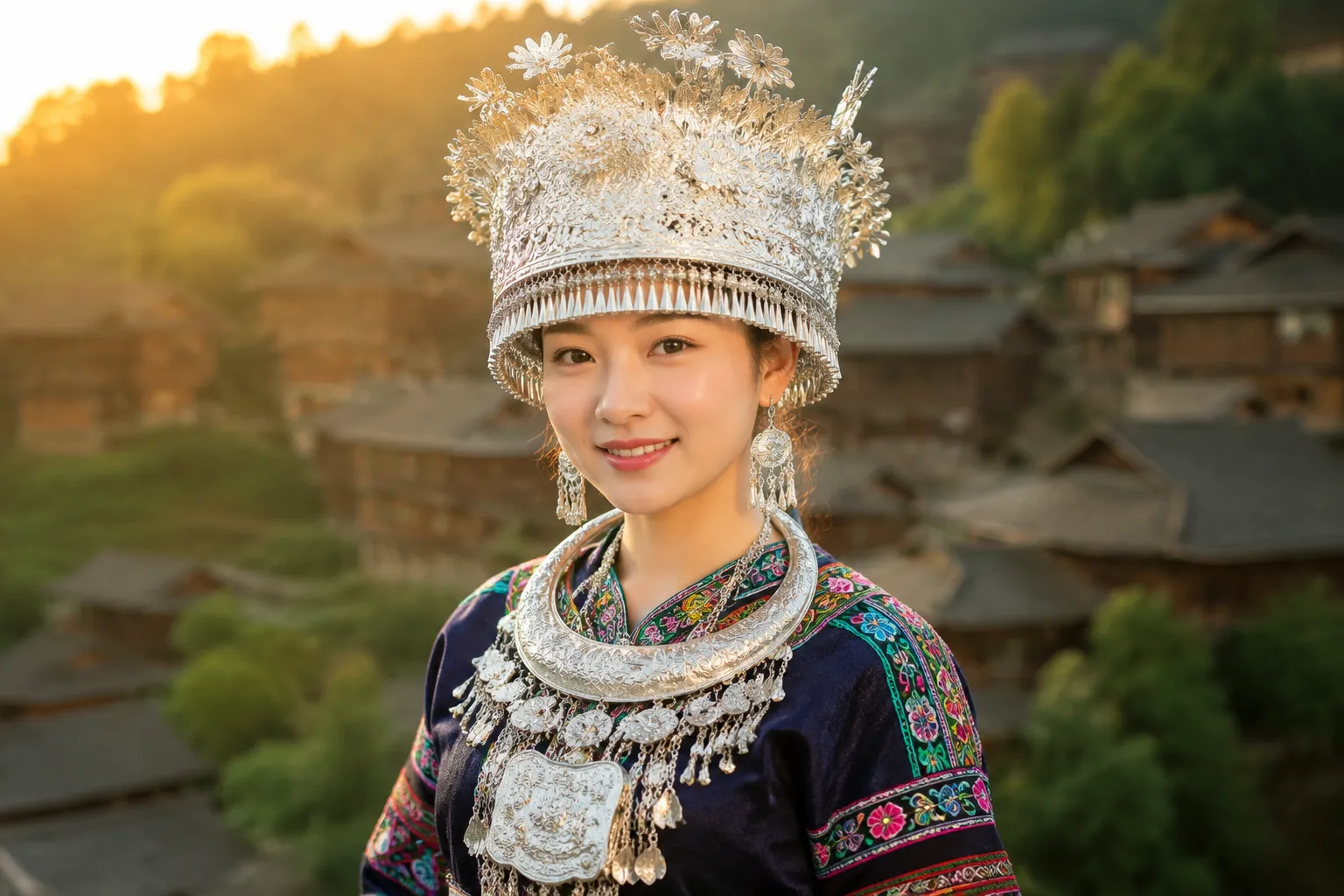
Ethnic & Minority 少数民族服饰
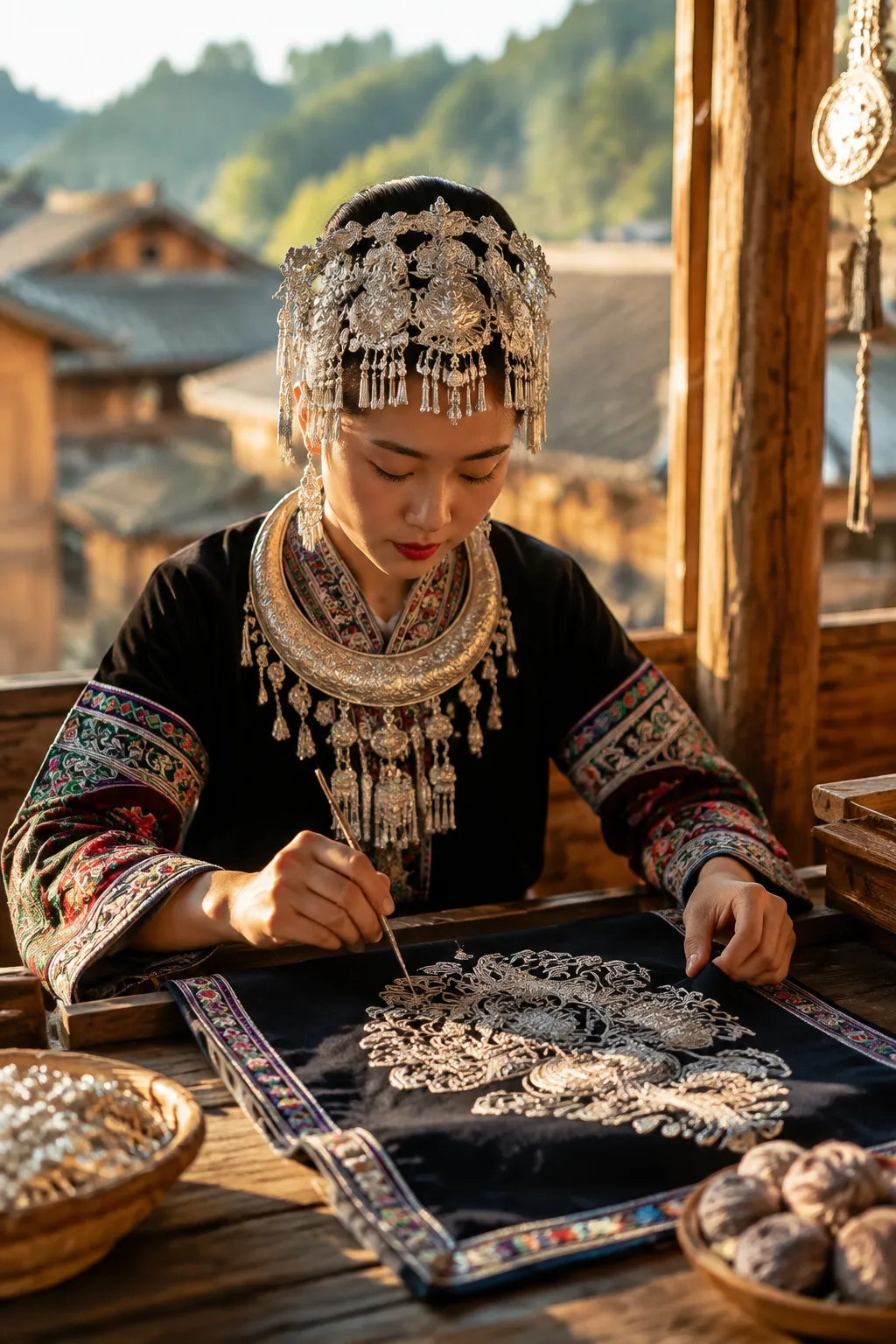
Miao silver headdresses, Tibetan woolen chuba robes, Uyghur atlas silk — living textile traditions worn daily in villages across western and southern China.
Explore ethnic traditions →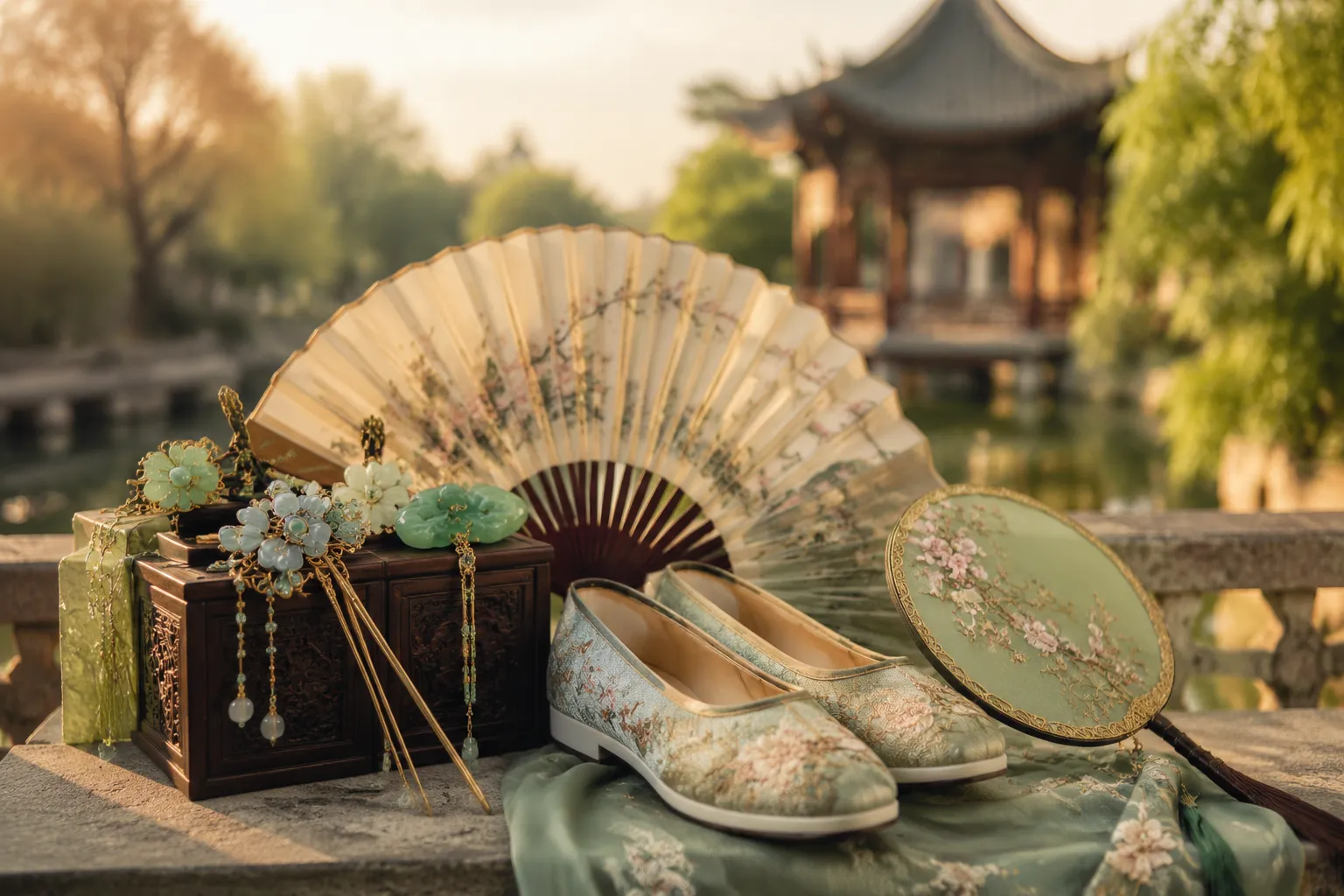
Accessories 传统配饰
Hand-painted silk fans, jade pendants, hairpins, Chinese knotwork, and embroidered shoes — the details that complete a traditional outfit and make the best souvenirs.
Browse accessories guide →Travel Through 2,000 Years of Fashion
Each dynasty left its mark on clothing - and on the cities you can still visit today.
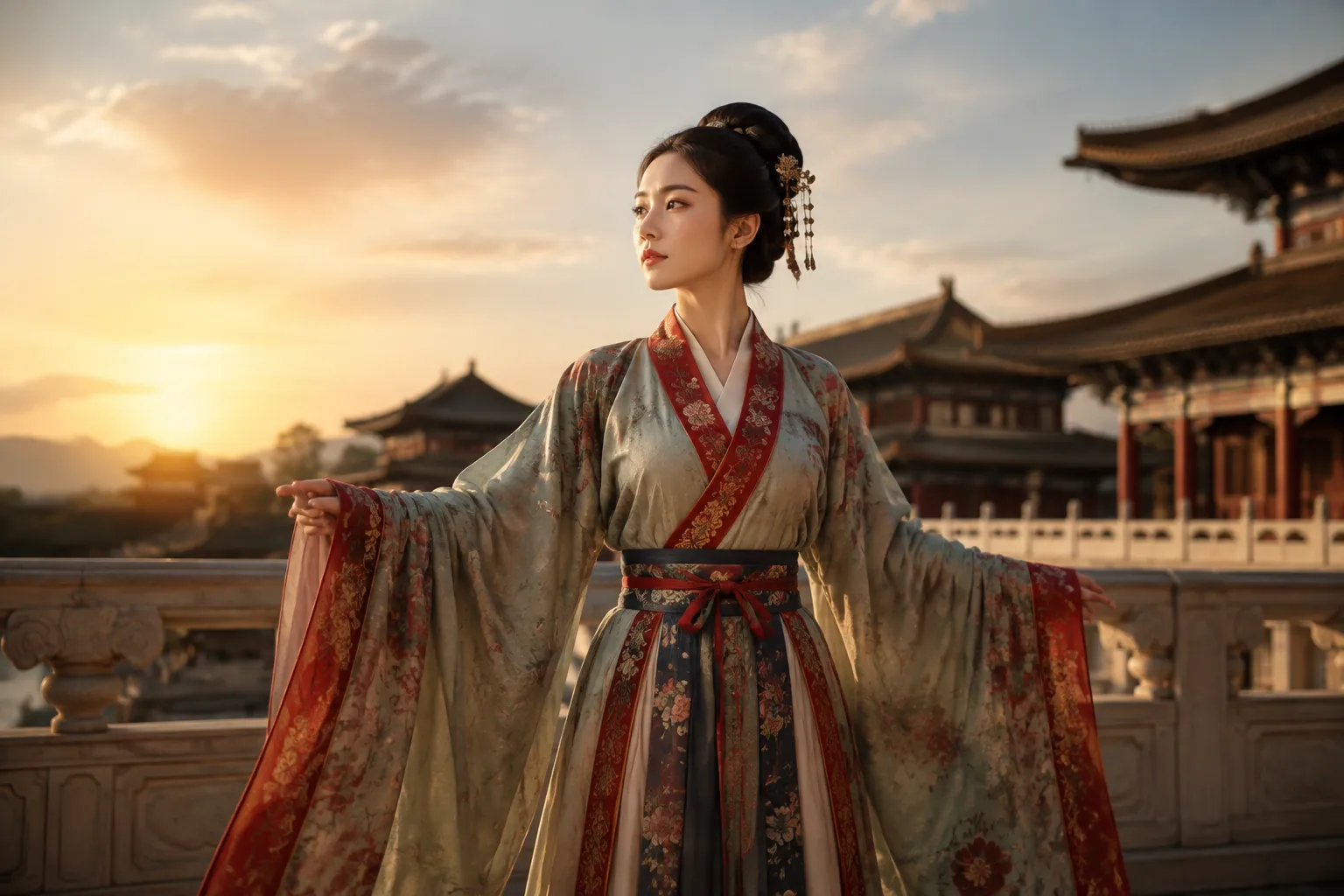
Han Dynasty
Deep overlapping collars, flowing wide sleeves. The origin of the term Hanfu itself.
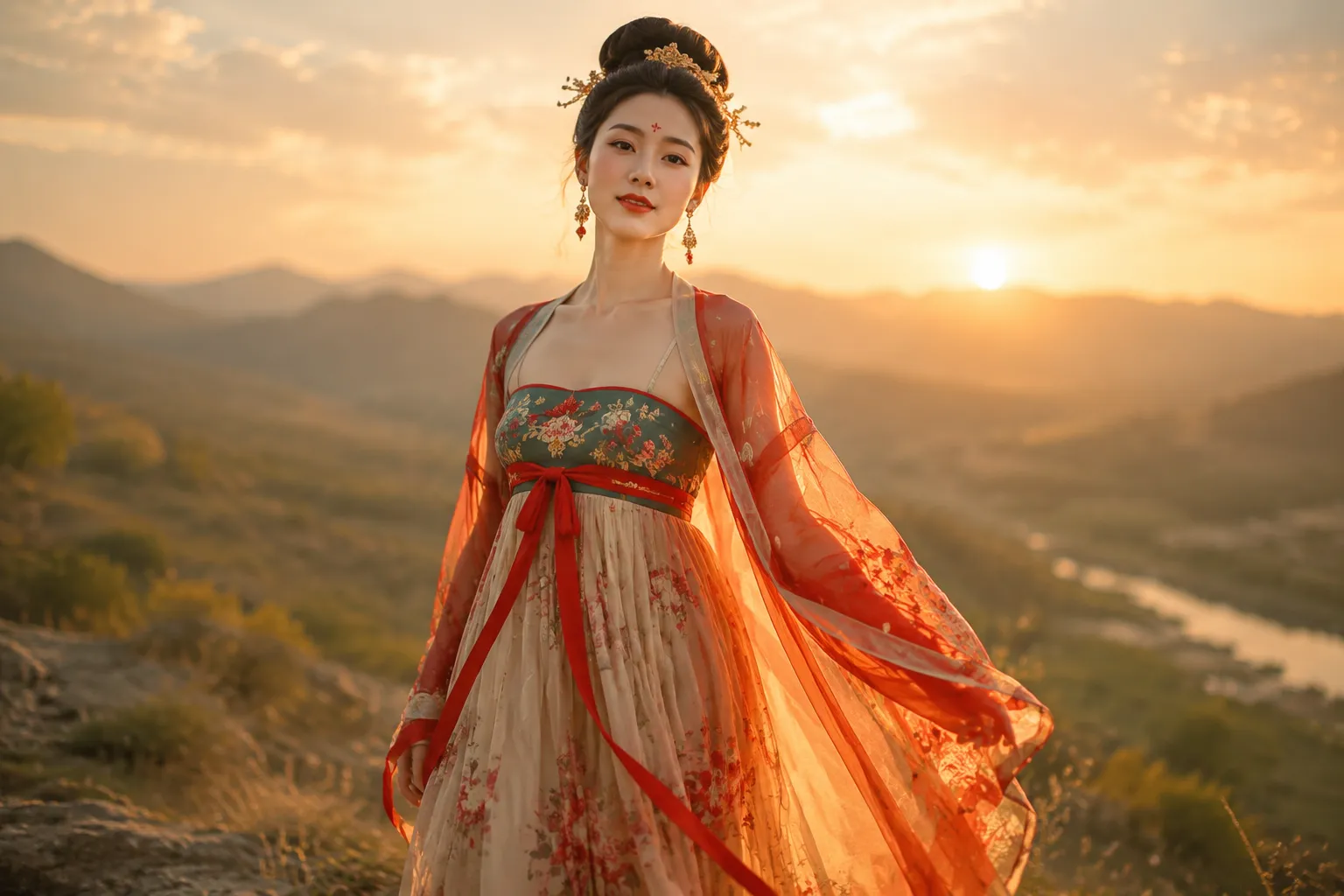
Tang Dynasty
Bold colors, low-cut necklines, high-waisted skirts. China''s golden age of fashion.

Song Dynasty
Elegant restraint, narrow sleeves, simple lines. Understated sophistication.

Ming Dynasty
Pleated skirts, circular collars. Hanfu revival''s primary reference.
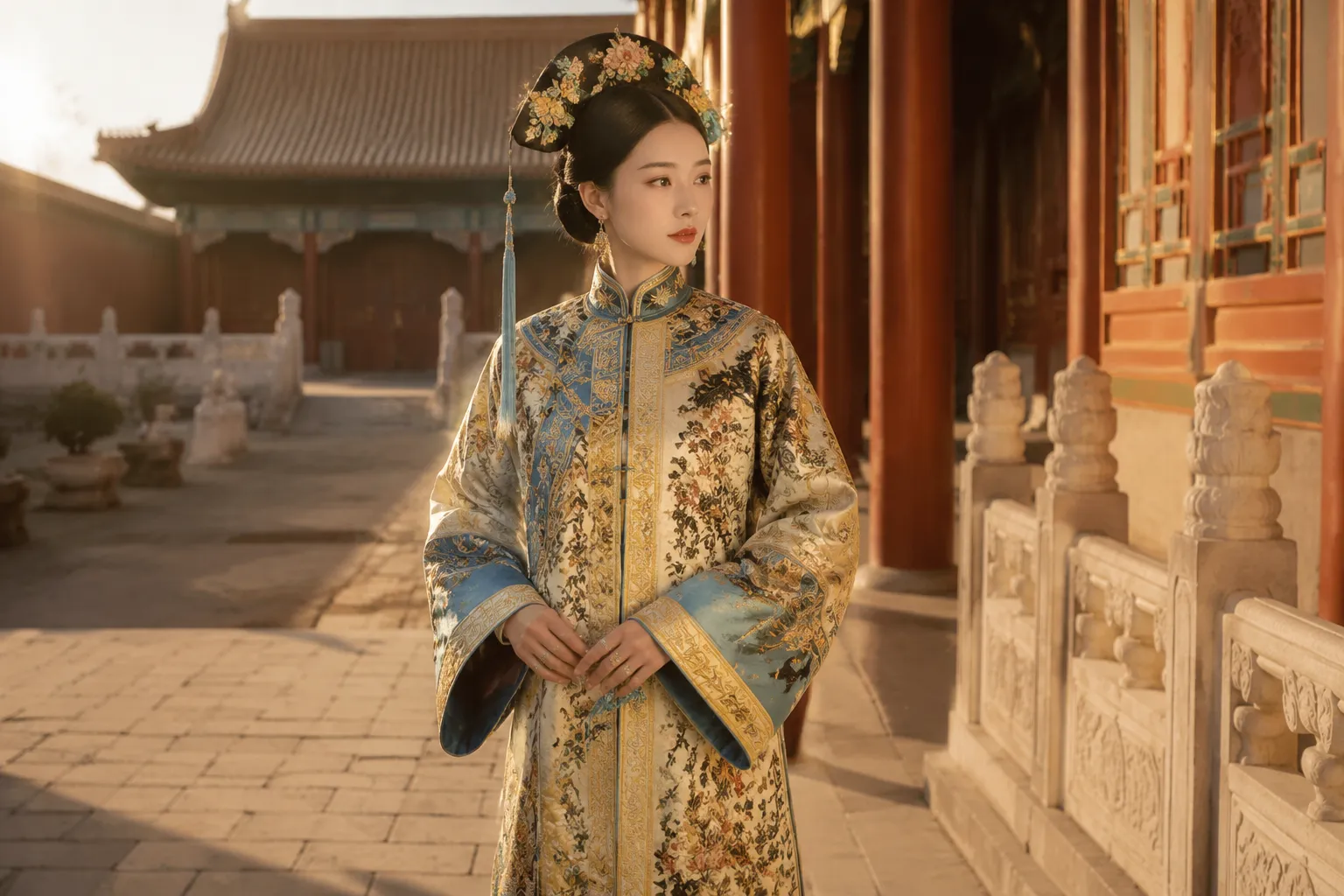
Qing Dynasty
Manchu-influenced qipao origins, elaborate silk embroidery.
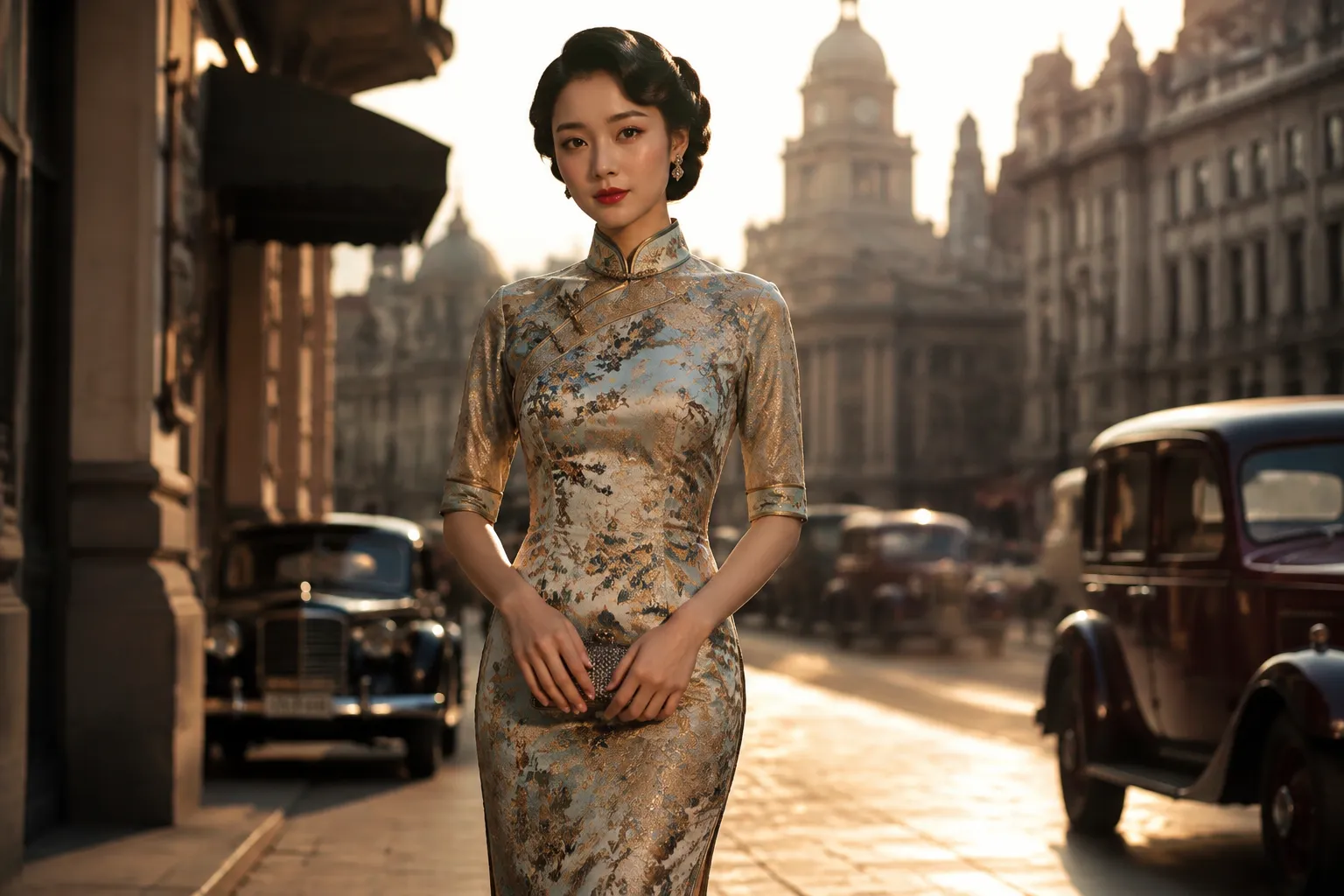
Republic Dynasty
Qipao''s golden age. Western tailoring meets Chinese silk.
Your First Hanfu Experience in China
Here''s what a typical cultural experience looks like, from rental to photoshoot.
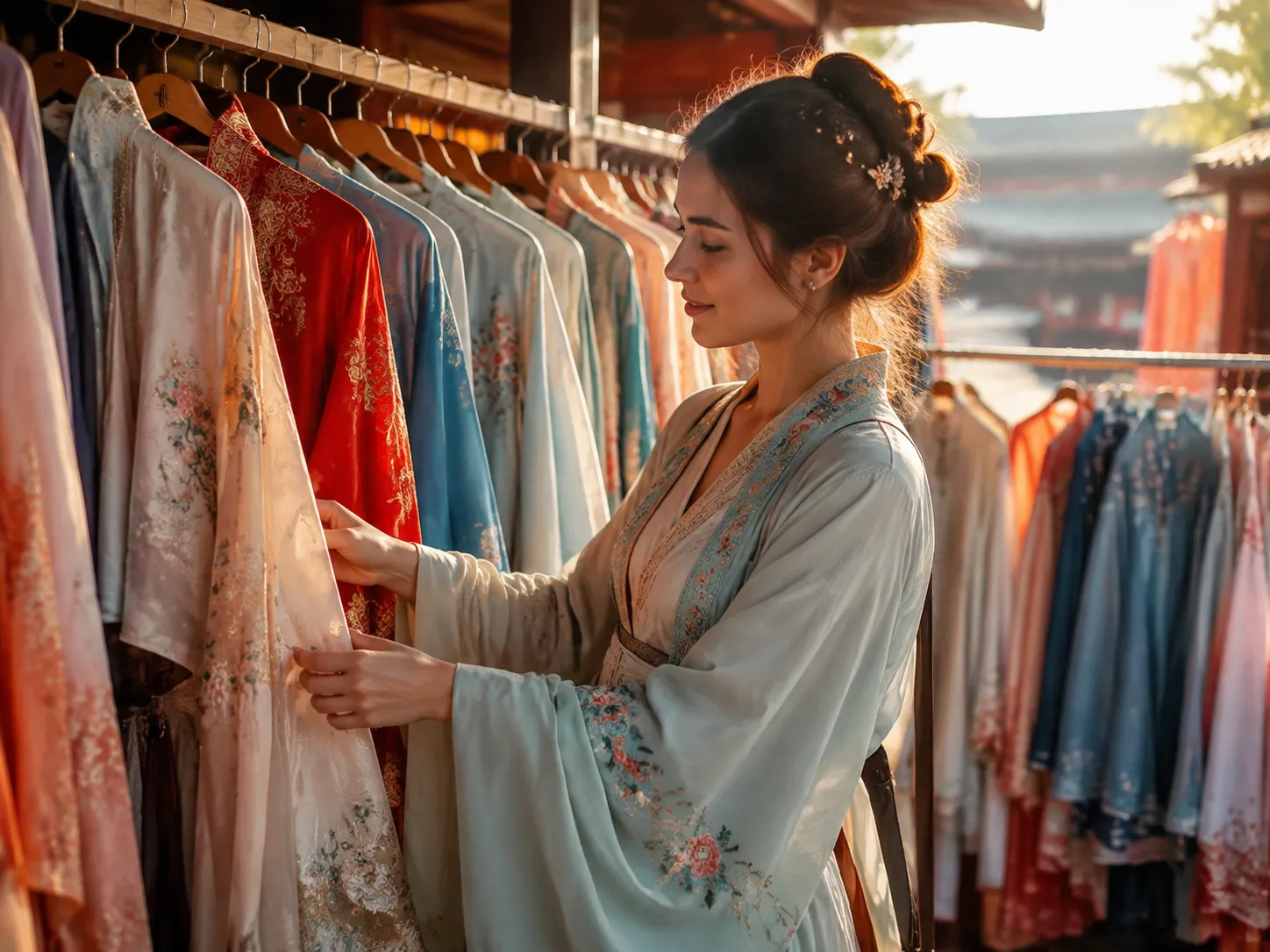
Pick Your Dynasty & Style
Most experience shops offer 50+ styles across dynasties. Tang dynasty chest-high ruqun is the most photogenic; Ming dynasty stand-collar aoqun feels the most regal. Staff help you choose based on body type and preferred era. Budget 15-20 minutes for selection and fitting.
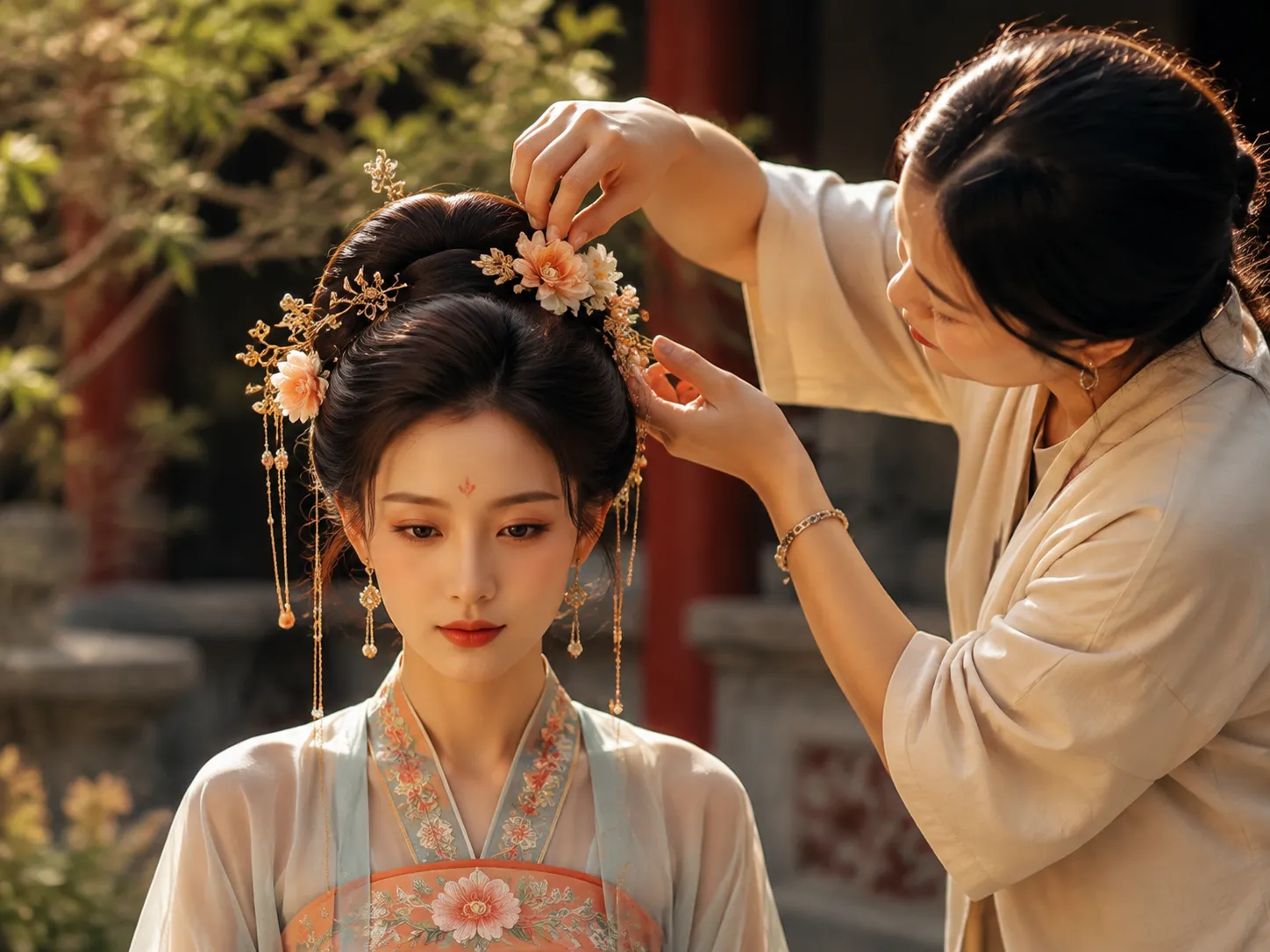
Hair & Makeup Styling
Professional hairstyling takes 20-30 minutes using traditional hairpins, flowers, and hairpieces. Makeup artists replicate dynasty-appropriate looks - from Tang''s bold forehead huadian to Ming''s elegant simplicity. Most rental shops include basic styling; premium packages add professional makeup.
Explore & Photoshoot
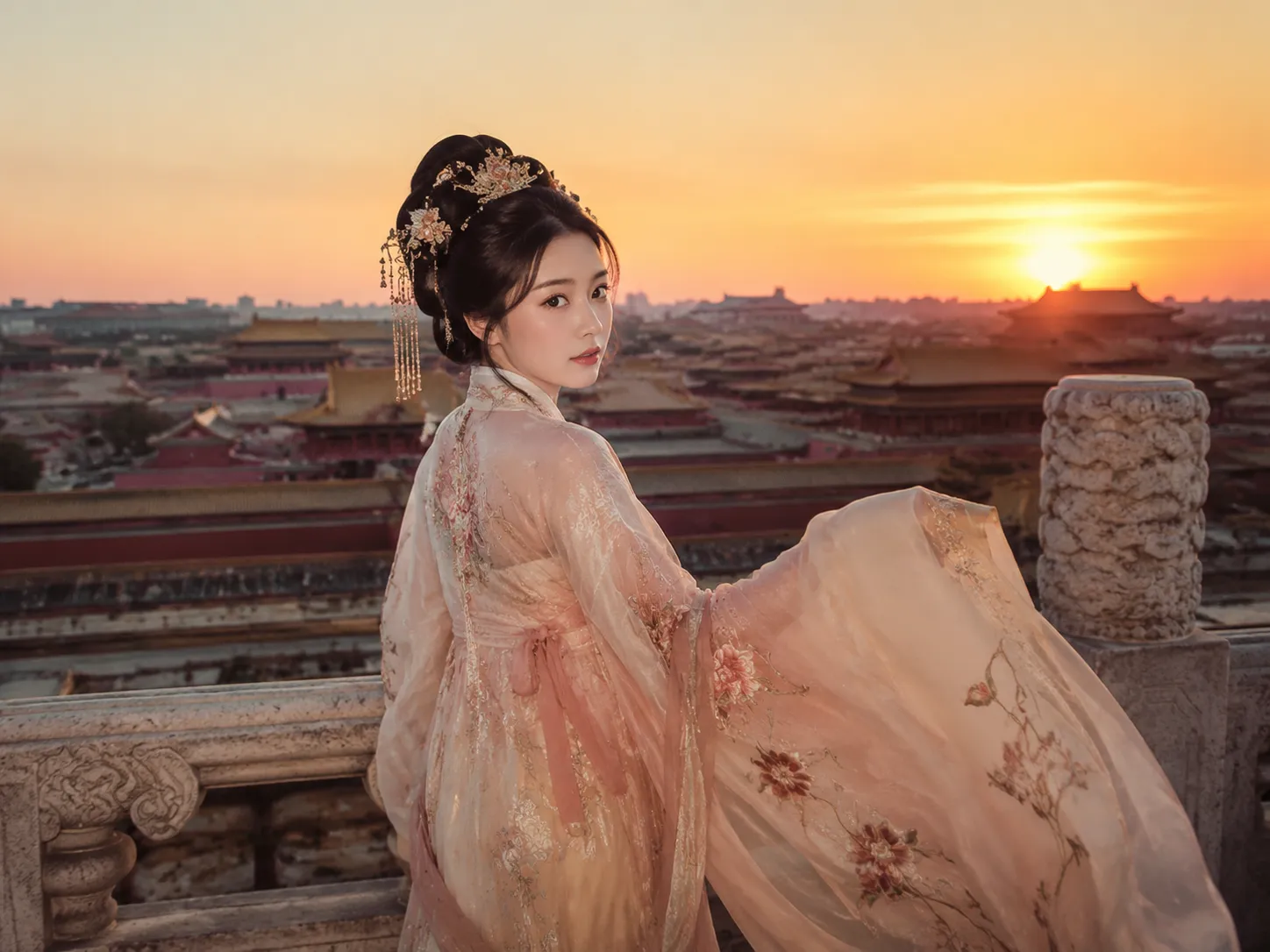
Step out in full costume to iconic spots. Xi''an''s city wall at sunset, Suzhou''s classical gardens in morning light, Beijing''s Forbidden City framed by red walls - each location offers a different backdrop. Most rentals include 2-4 hours of wear time (150-400 RMB). Book a photographer for 500-1500 RMB for professional shots.
Looking to Buy Traditional Clothing?
Where to find authentic pieces, from custom tailoring to ready-to-wear.
Custom Qipao
Bespoke cheongsam at Shanghai South Bund Fabric Market. 3-5 day turnaround, 300-800 RMB.
See qipao guide →Tang Suit & Jackets
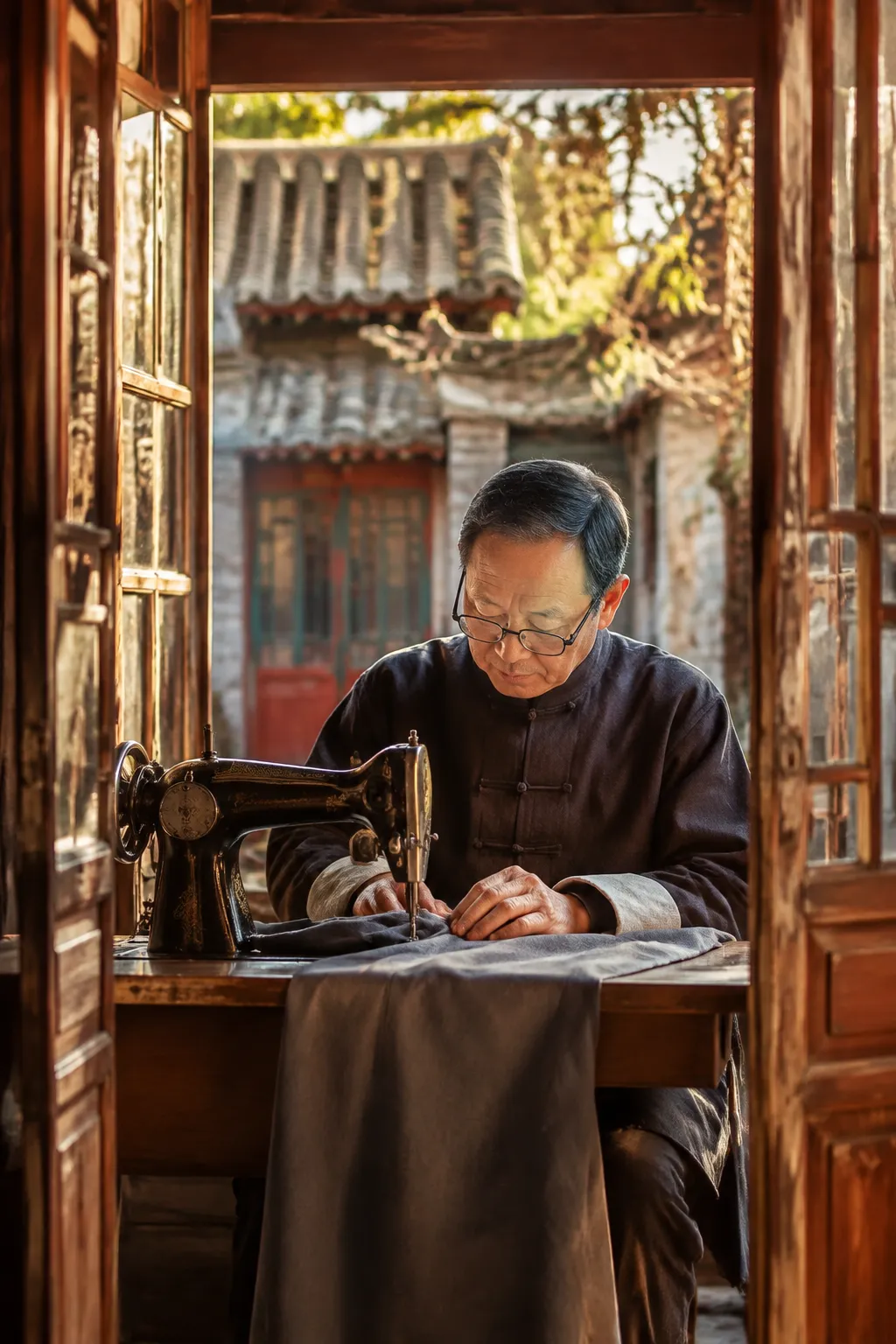
Beijing hutong tailors craft authentic mandarin-collar jackets. Off-the-rack from 50-150 RMB.
See tang suit guide →Accessories & Textiles
Silk fans, jade pendants, embroidered shoes in Suzhou and Hangzhou markets.
See accessories guide →Ready to Book Your Trip?
Everything you need to turn inspiration into an itinerary.
Visa & Entry Guide
144-hr transit, 15-day visa-free, L visa - which one you need
Getting Around
High-speed train routes, costs, and booking tips
Sample Itineraries
5-day, 7-day, and 14-day trip plans
Budget Breakdown
Full cost estimates for a cultural clothing trip
Best Seasons
When to visit each city for the best experience
What to Pack
Apps, clothing, and photoshoot essentials
Where to Experience Chinese Traditional Wear
Click any city to see what traditional clothing experiences await you there.
Real Travelers, Real Experiences
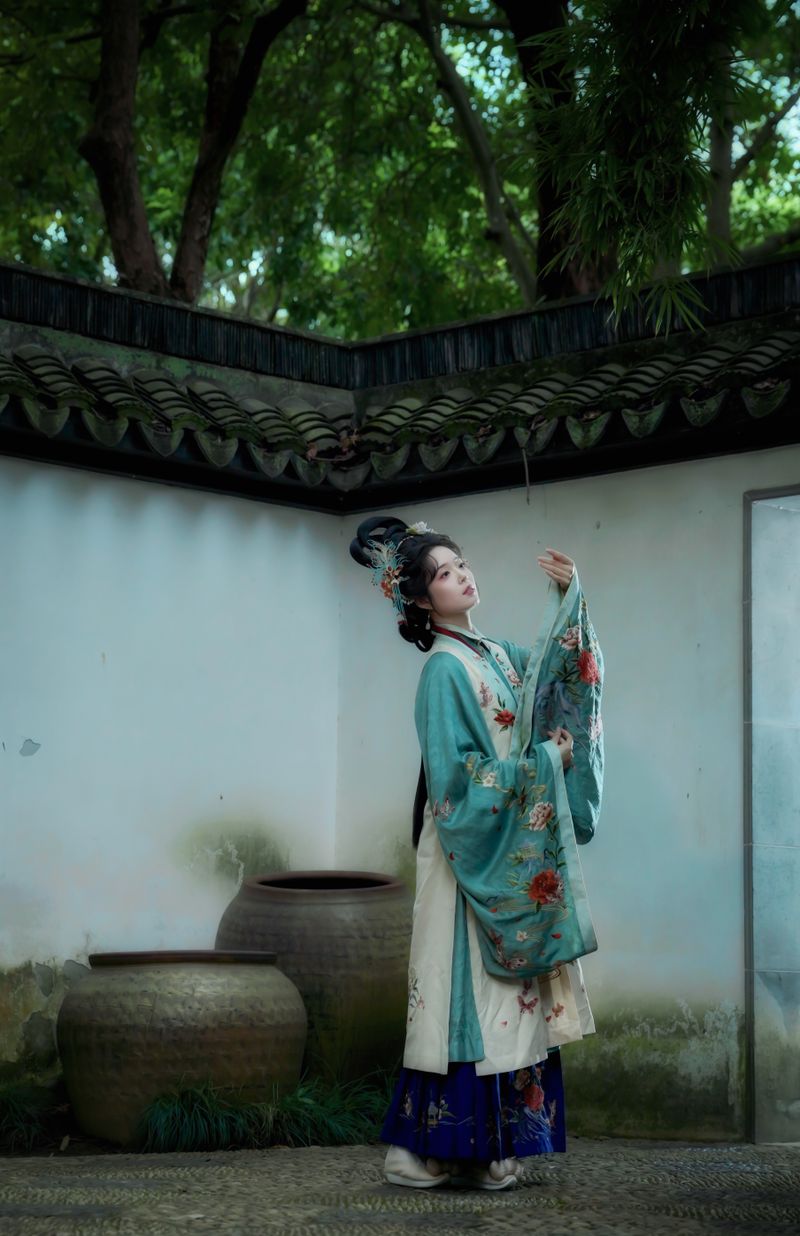
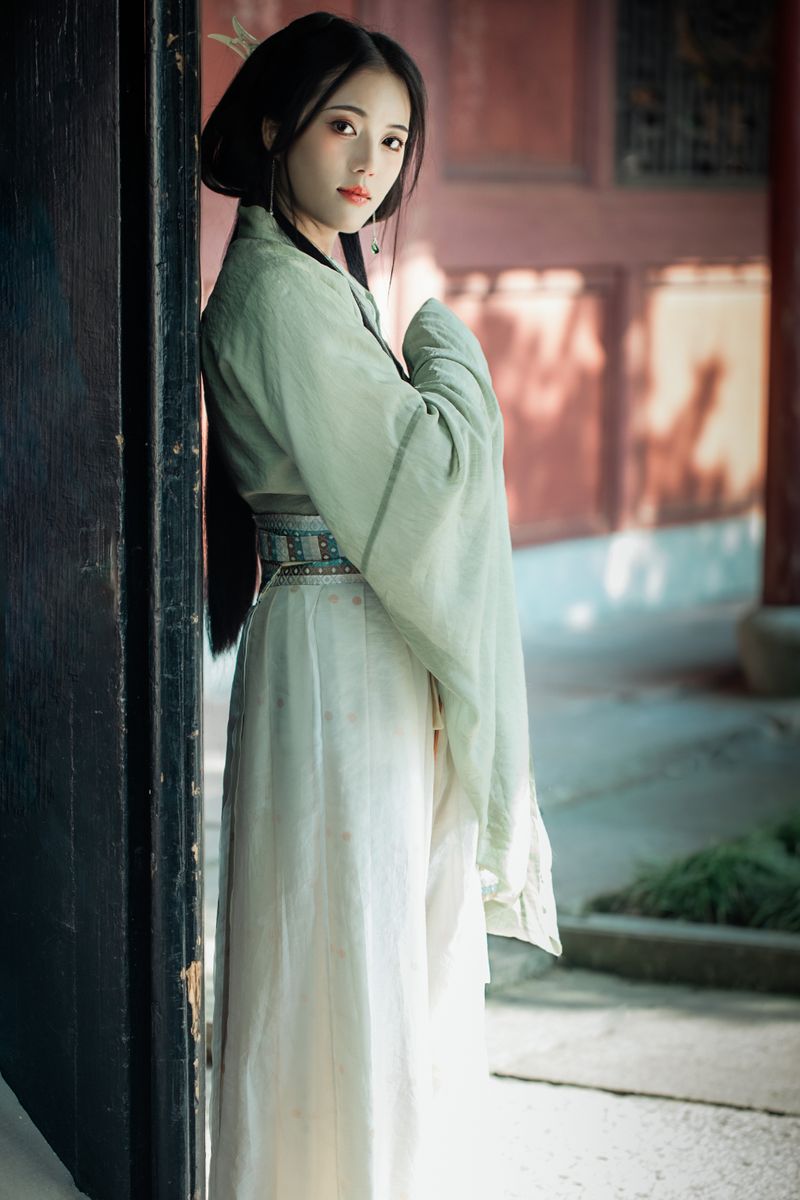
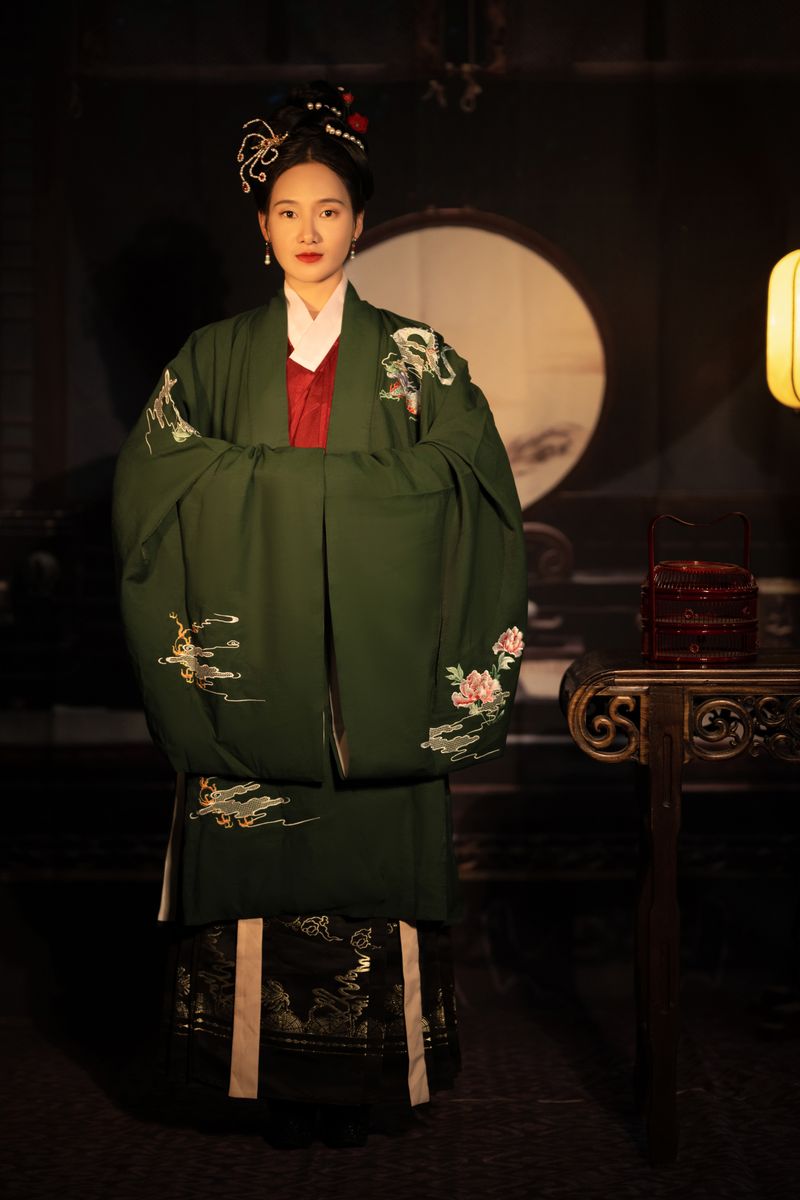
See how visitors bring Chinese traditional clothing to life at iconic destinations across the country.
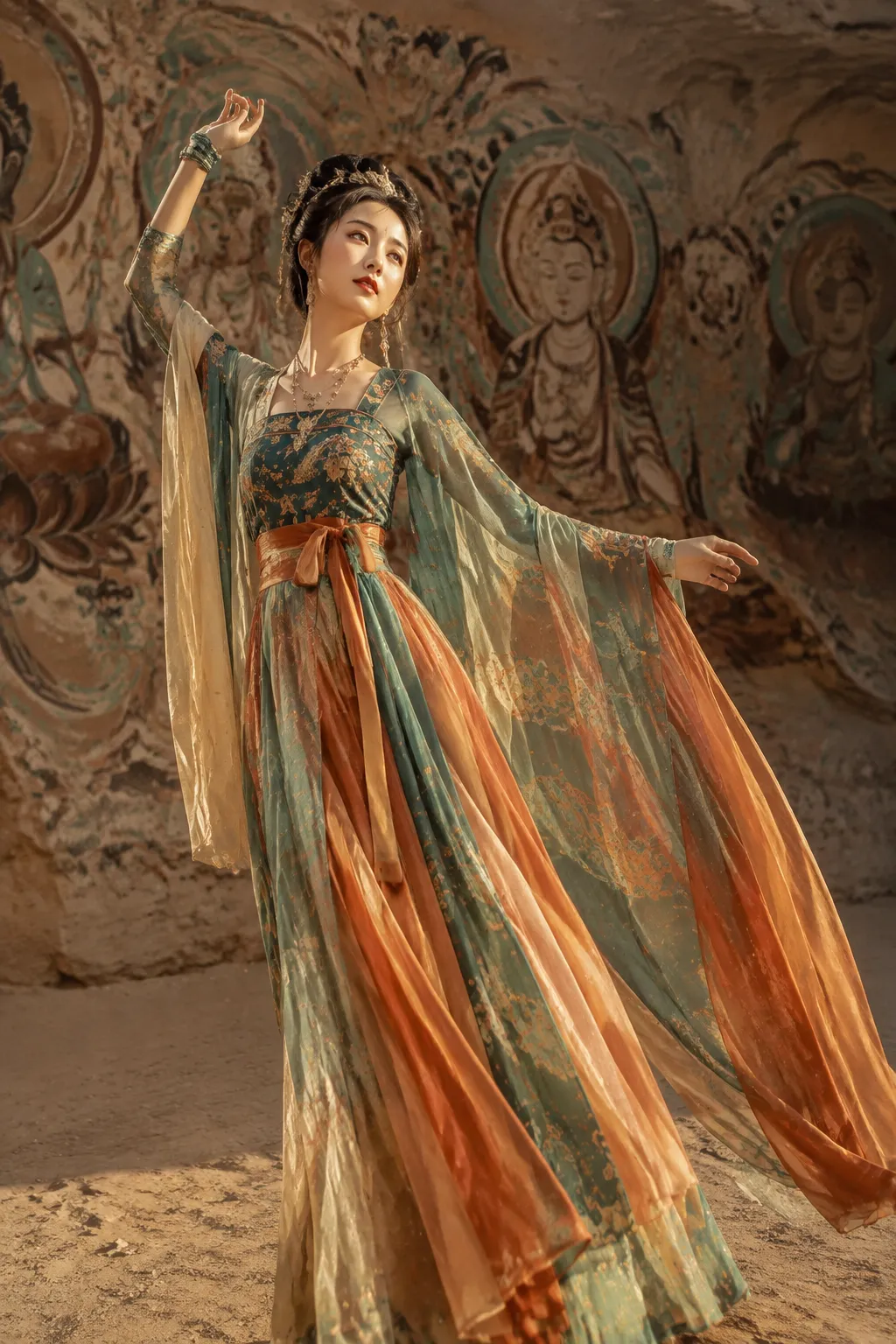


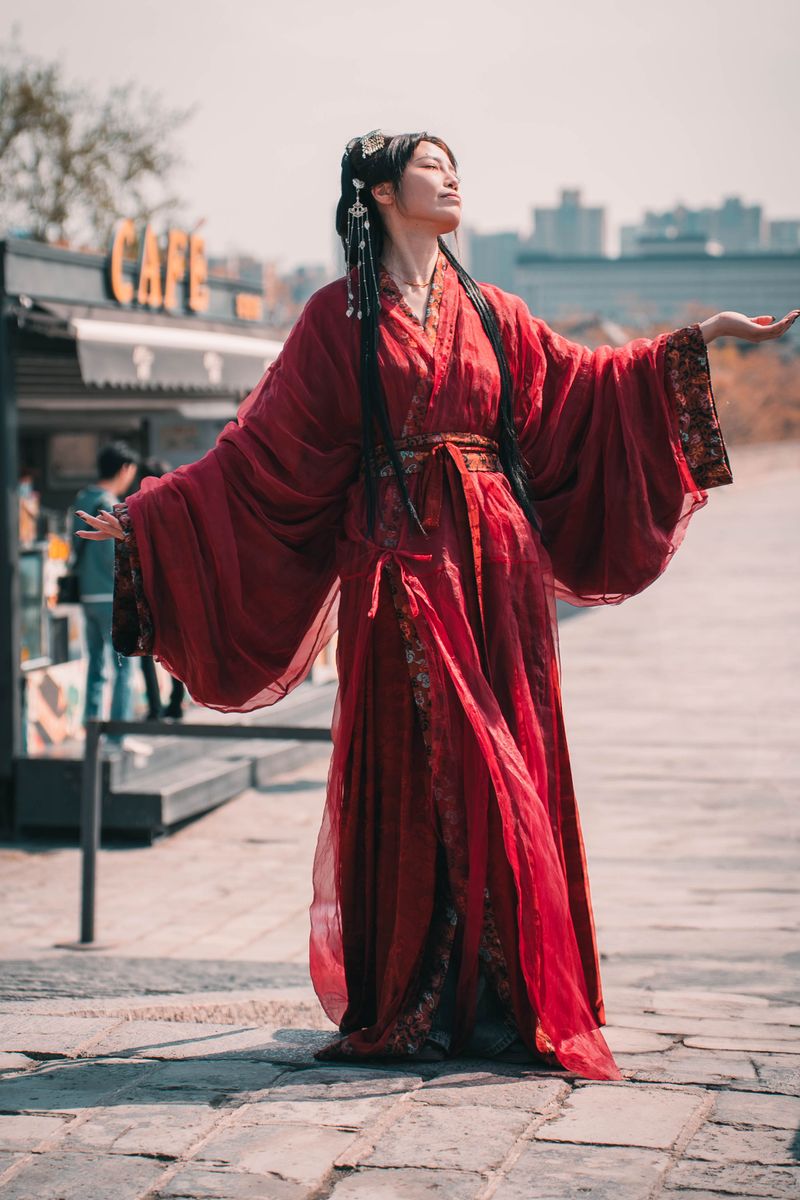
Travel Questions About Chinese Traditional Wear
Everything you need to know before booking your cultural experience.
Where can I try on Chinese traditional clothing in China?
The best cities for hands-on experiences: Xi''an (Hanfu photoshoots at the ancient city wall and Daming Palace, costume rentals from 100-300 RMB), Shanghai (qipao tailoring in the French Concession, South Bund Fabric Market for custom pieces), Beijing (tang suit workshops in hutong tailor houses), Suzhou (silk qipao rentals for classical garden photoshoots), and Guizhou (Miao embroidery villages near Kaili where you can dress in full silver headdresses). Most major museums including the China National Silk Museum in Hangzhou offer costume try-on sessions.
Which city is best for Hanfu experiences?
Xi''an tops the list - the ancient city wall, Daming Palace ruins, and Datang Everbright City are packed with Hanfu rental shops and photoshoot studios. Luoyang (Longmen Grottoes area) and Chengdu (Jinli Ancient Street) are close seconds, each with thriving Hanfu streets where locals and tourists alike stroll in period costume. For the most immersive experience, visit Xi''an during the annual Hanfu Culture Festival (usually in April).
How much does a Hanfu rental and photoshoot cost?
Typical costs: basic Hanfu rental 100-200 RMB for 2-4 hours including basic hairstyling; premium sets with professional makeup and hair 300-500 RMB; full photoshoot package with photographer 500-1500 RMB for 1-2 hours at iconic locations. Xi''an city wall has an entry fee of 54 RMB on top of rental. Most shops require a 200-500 RMB refundable deposit. Booking through Chinese apps like Meituan or Xiaohongshu often gets you 20-30% off walk-in prices.
Where can I buy authentic Chinese traditional clothing while traveling?
Shanghai''s South Bund Fabric Market for custom qipao (3-5 day turnaround), Beijing''s Silk Street for tang suits and off-the-rack Hanfu, Suzhou for silk brocades and accessories, and Xi''an''s Muslim Quarter surroundings for Hanfu shops. For ethnic minority textiles, head to Kaili in Guizhou or Dali in Yunnan for authentic handmade pieces direct from artisans.
General Clothing Questions
What is Chinese traditional wear called?
The most common term is "Hanfu" for traditional Han Chinese clothing from ancient dynasties. "Qipao" or "Cheongsam" refers to the form-fitting dress popularized in 1920s Shanghai. "Tang suit" describes the mandarin-collared jacket worn for festivals and formal occasions. Each name refers to a different style, silhouette, and historical period.
What is the difference between Hanfu and Qipao?
Hanfu dates back over 3,000 years and features loose, flowing robes with crossed collars and wide sleeves. Qipao emerged in 1920s Shanghai with a form-fitting, one-piece silhouette, high mandarin collar, and side slits. Hanfu represents ancient imperial China; Qipao represents modern Shanghai glamour and the fusion of East and West.
Is it appropriate for non-Chinese people to wear traditional Chinese clothing?
Generally yes, when worn with respect and understanding of cultural context. Cultural appreciation vs. appropriation depends on intent and context: learning about and honoring the tradition is widely welcomed. Many Chinese cultural organizations and historical sites actively encourage visitors to try on traditional clothing as a way to engage with and celebrate Chinese heritage.
What did Chinese emperors wear?
Chinese emperors wore the "dragon robe" (longpao) in brilliant yellow silk embroidered with nine dragons, clouds, waves, and the twelve imperial symbols. Yellow was reserved exclusively for the emperor. The robe was worn with a jeweled crown, jade belt, and ornate court beads. You can see original imperial robes at the Palace Museum in Beijing''s Forbidden City.
Sources & Further Reading
The historical facts, garment details, and museum information in this guide are cross-checked against the following official institutions:
- · The Palace Museum (故宫博物院) — imperial dress and dragon robe collections, Beijing.
- · China National Silk Museum (中国丝绸博物馆) — silk textiles and Hanfu research, Hangzhou.
- · China Culture Center — official resources on intangible cultural heritage and traditional crafts.
Quoting this guide: you are welcome to cite ChinaStyle. Please attribute quotes to "Li Wei, ChinaStyle" and link back to the relevant page.
Compare All Styles Side by Side
See how Hanfu, Qipao, Tang Suit, and Zhongshan Suit compare — silhouette, cost, prep time, and which city offers the best experience for each.
See Style ComparisonsWritten by Li Wei · Last verified: August 6, 2026 · Our editorial team reviews and updates all guides regularly to keep pricing, hours, and travel advice current.